

Unseen Disabilities
Have you ever seen someone stand up at the airport to preboard and thought, “They don’t look like they have a disability.” Many people suffer in silence and go unnoticed because, on the surface, they appear fine. When most people think of a disability, they often picture a wheelchair. The familiar blue sign with the white wheelchair has become a universal symbol of disability. While it serves an important purpose, it doesn’t fully capture the wide range and diversity of experiences within the disability community.
There are numerous conditions that go unseen and, unfortunately, still cause severe daily challenges, along with social stigma surrounding disability.
Mental health disorders, autoimmune disorders, along with chronic illnesses such as Crohn’s disease, chronic pain, or diabetes, can significantly interfere with a person’s ability to work—even if they appear “okay” on the outside.
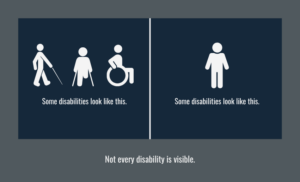
When it comes to Social Security Disability Insurance (SSDI) benefits, individuals with invisible disabilities may feel shame or hesitation about applying, believing they aren’t “disabled enough” to qualify for help. But they are not alone.
While these conditions may not be visibly apparent, with proper documentation and medical evidence, individuals can still be approved for benefits.
Understanding Hidden Disabilities
Hidden or unseen disabilities are conditions that are not obvious to others. They may not have visible marks or require assistive devices like a wheelchair or breathing tube. Yet, these conditions still affect one’s Residual Functional Capacity (RFC) and keep you from engaging in Substantial Gainful Activity (SGA); both are key in the SSDI evaluation process. Examples include:
- Mental illness (anxiety, depression, PTSD, and more)
- Autoimmune disorders like lupus or Multiple Sclerosis (MS)
- Gastrointestinal diseases like Crohn’s disease
- Arthritis
- Epilepsy
- Chronic pain or chronic fatigue
These conditions may not be visible, but they can significantly impact a person’s ability to concentrate, move, sit, or stand for extended periods, and maintain overall stamina. If your condition limits your ability to work, you may be eligible for SSDI benefits.
Mental Health Conditions
Mental health conditions are often what people think of first when considering invisible disabilities, and they can feel especially difficult to prove because they don’t present as obvious physical limitations. Conditions such as PTSD, bipolar disorder, and schizophrenia won’t appear on an X-ray, yet their impact can be profound. With thorough medical evidence—including detailed documentation from therapists and psychiatrists that demonstrates how symptoms limit the ability to work—these conditions can be clearly substantiated.
Chronic Conditions
Autoimmune disorders, diabetes, and chronic pain each come with their own challenges. Many of these conditions are episodic, with symptoms that can flare up or worsen under stress. It’s important to document these patterns and communicate them clearly to your doctors.
Depending on the severity of a person’s symptoms—and how well they are documented—a single condition may be enough to qualify for benefits. In other cases, individuals may have multiple conditions that, when combined, significantly limit their ability to work and support a claim for benefits.
One of the most important things to remember when applying for SSDI is that your case comes down to your medical records. Without thorough documentation and supporting proof, the Social Security Administration (SSA) is unlikely to recognize a condition as disabling. 
Unseen Disabilities and SSDI Benefits
It may seem harder to apply for benefits if your disability is overlooked or not on the SSA’s Blue Book. The “Blue Book” is a comprehensive guide listing medical criteria that the SSA uses when determining disability benefits eligibility. It has a list of medical impairments that covers 14 main body system categories.
However, it does not mean that you will not be approved.
Here are some things to keep in mind when applying for SSDI benefits.

- Medical Records: It is important to treat with your doctors and follow their plan of care. Individuals that get approved for benefits commonly have ongoing treatment with multiple doctors and specialists and are still unable to work due to their conditions.
- Keep Track of Your Symptoms: Maintain a detailed record of how your condition affects your ability to work and perform daily activities. Be sure to discuss your symptoms with your doctor so that your medical records accurately reflect your experiences, including specific examples such as difficulties with sitting or standing for extended periods, maintaining hygiene, or completing routine tasks.
- Get a supporting doctor’s statement: A thorough letter from your provider or medical team explaining how your condition impacts your daily life can serve as strong supporting evidence.
- Contact a disability law firm: It is highly recommended to hire an experienced disability lawyer who can help you navigate the application process, gather all important documentation and paperwork, help explain why your condition is medically equivalent to a listed impairment, and make the strongest possible case.
Fierce Advocacy
Nyman Turkish has a team of highly experienced disability attorneys with an approval rate that exceeds the national average. Our Firm combines skilled lawyers with knowledgeable case managers who understand the ins and outs of the SSDI application process.
Living with a disabling medical condition is already challenging; you don’t have to navigate this process alone. We’re here to support you every step of the way, helping strengthen your claim while treating every client with the care and compassion they deserve.
If you need help with your claim, visit our website or call (877) 529-4773 to speak with a dedicated member of our team who’s ready to help.
