

National Spinal Cord Injury Awareness Month: Raising Awareness and Understanding SSDI Options
September is National Spinal Cord Injury (SCI) Awareness Month, designated by the U.S. Senate to educate the public about the realities of living with an SCI.
That recognition grew out of the work of The Miami Project to Cure Paralysis, a Florida-based research center advancing treatments to repair and restore function in people with injured and diseased nervous systems.
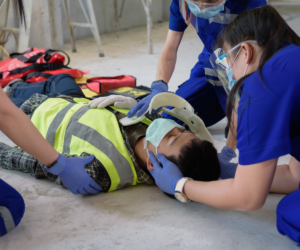
Spinal cord injury touches far more lives than many people realize. The National Spinal Cord Injury Statistical Center estimates that roughly 308,000 people are currently living with an SCI in the United States, with about 18,400 new injuries occurring each year. Vehicle crashes and falls are the leading causes, followed by acts of violence and sports or recreational injuries.
Throughout September, hospitals, research centers, and advocacy organizations use the month to share resources, highlight progress in treatment and rehabilitation research, and draw attention to what daily life actually looks like with an SCI, from mobility and independence to employment and financial stability. That last piece, how to stay financially secure after a life-changing injury, is one of the most pressing and least talked-about challenges families face.
Qualifying for SSDI benefits with an SCI
A severe injury or condition that results in an SCI brings a life-changing, challenging adjustment. You may become paralyzed or lose significant function, and while you’re coming to terms with this new reality, you may also be wondering how you’ll provide for yourself and your family.
In many cases, an SCI keeps a person from working for at least 12 months, which may make them eligible for Social Security Disability Insurance (SSDI) benefits.
The Social Security Administration (SSA) lists SCIs as a “listed” impairment in its official Blue Book, under section 1.15 Musculoskeletal Disorders and also in section 11.08 Neurological disorders. Meeting one of these listings means your medical evidence satisfies every specific criterion the SSA requires for that impairment. If you aren’t working above the substantial gainful activity level and your condition has lasted or is expected to last at least 12 months, the SSA finds you disabled at that point — without going on to assess what work you can still do, or whether your age, education, and work history would let you adjust to a different job.
Being on that list, however, doesn’t mean you automatically qualify. To qualify for SSDI benefits, your SCI must be supported by medical evidence such as:
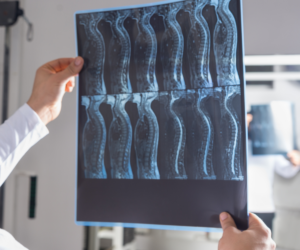
- Imaging, like a CT scan, MRI, and an X-ray, showing the damage
- A doctor’s diagnosis
- Proof of spinal cord compression that makes it impossible to do things like walk or move parts of your body
If your SCI happened while you were on the job, you may also be entitled to Workers’ Compensation benefits. Workers’ Compensation and SSDI are separate systems with different requirements, and in some cases you may be able to pursue both, though your combined benefits could be subject to offset rules.
An experienced attorney can help you understand how the two work together in your specific situation. If your work-related SCI happened in California, Nyman Turkish handles Workers’ Compensation cases there and may be able to help you pursue that claim alongside your SSDI case.
Residual Functional Capacity evaluation
In some cases, your SCI doesn’t line up exactly with SSA’s Blue Book medical criteria, but that doesn’t mean your claim is over. The SSA can still evaluate it through a Residual Functional Capacity (RFC) assessment, which looks at what you’re still able to do despite your SCI, such as how long you can sit, stand, or walk, how much you can safely lift or carry, and whether you can use your hands and arms for tasks like reaching, gripping, or typing.
The SSA compares your RFC to the demands of your past work. If you can no longer do that job, it then considers whether there is other work you could reasonably be expected to do given your RFC, age, education, and work experience. Because so much rides on this assessment, thorough medical records and a clear, well-documented picture of your day-to-day limitations from your treating physicians can make a real difference.
If your claim is denied
An SSDI denial isn’t unusual, and it doesn’t mean your case is over. Many claims that are turned down at the initial application stage are later approved on appeal. If you’re denied, you generally have 60 days to request reconsideration, and if that’s denied as well, you can request a hearing before an Administrative Law Judge. Learn more about what to do if your claim is denied in our blog article “The Social Security Administration Denied My SSDI Claim. What Should I Do?”
Fierce Advocacy
Navigating an SSDI claim while adjusting to life with an SCI can feel overwhelming. At Nyman Turkish, we stand by your side every step of the way, from gathering the medical evidence that supports your claim to representing you if your case needs to go before a judge.
If you or a loved one is living with a spinal cord injury and are unable to work, we offer a free case evaluation to help you understand your options, so you can focus on what matters most: your health.
Visit our website or call us at 877-529-4773 to speak with a dedicated member of our team who’s ready to help.
