

Brain Injury Awareness Month: Understanding TBI and SSDI Benefits
March is Brain Injury Awareness Month, an initiative started more than 30 years ago by the Brain Injury Association of America to raise awareness about brain injuries, reduce stigma, support survivors, and promote prevention strategies.
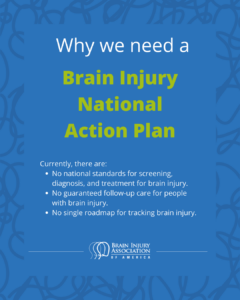
Brain injuries occur when a blow, jolt, or bump to the head—or a penetrating injury—disrupts normal brain function. They can result from falls, car accidents, acts of violence or assault, or sports-related impacts. In these situations, an external force causes the brain to move or shake inside the skull, which can damage brain tissue and blood vessels. There are also behavioral issues that you may experience, like mood-swings and emotional instability.
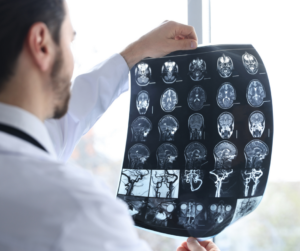
Brain injuries can range from mild, such as a concussion, to severe. Depending on the extent of the injury, they may cause temporary or permanent impairments affecting a person’s cognitive, physical, and emotional functioning. A brain injury requires immediate medical attention. Diagnosis often involves imaging tests such as CT scans or MRIs, and common symptoms may include headaches, fatigue, and memory problems. After an incident in which an individual suffers a head injury, they may have long-term effects that impact cognitive function.
More than 64 million Americans have sustained at least one traumatic brain injury (TBI).
Suffering a TBI can be overwhelming and, in many cases, life-altering. Lasting symptoms from a TBI can make it difficult or even impossible for someone to work and earn a living. If you are unable to work for at least 12 months due to a brain injury, you may qualify for Social Security Disability Insurance (SSDI) benefits through the Social Security Administration (SSA).
To qualify for SSDI benefits based on a TBI, medical documentation must show “marked” limitations in certain areas of functioning. In simple terms, “marked” means the problem seriously interferes with the person’s ability to function independently, appropriately, and consistently in daily life or work-related activities, indicating significant and ongoing difficulty.
Symptoms often include memory loss, disrupted motor function, and cognitive impairment. A brain injury can also significantly affect daily life—what the SSA refers to as activities of daily living—such as the ability to drive, remember and understand information, or care for yourself by performing basic tasks like showering and maintaining personal hygiene.
It is also likely that you not only have neurological effects but physical effects as well. Often, an individual who suffered from a TBI experience fatigue, sensitivity to light, trouble with balance and coordination, and other issues with fine motor skills. You may also experience vertigo, severe headaches, behavioral issues, mood-swings, and emotional instability.
SSDI Benefits from a Brain Injury
To be approved for benefits, there needs to be significant medical evidence of your TBI and how it has hindered your ability to work. Medical evidence would include medical records of imaging like MRIs and CT scans, psychiatric evaluations, and notes from your treating physicians describing effects on daily life.
The SSA evaluates TBI claims under Section 11.18 of its Blue Book, a medical guide that outlines qualifying conditions and the criteria needed for approval.
A. Disorganization of motor function in two extremities (see 11.00D1), resulting in an extreme limitation (see 11.00D2) in the ability to stand up from a seated position, balance while standing or walking, or use the upper extremities, persisting for at least 3 consecutive months after the injury.
OR
- Marked limitation (see 11.00G2) in physical functioning (see 11.00G3a), and in one of the following areas of mental functioning, persisting for at least 3 consecutive months after the injury:
- Understanding, remembering, or applying information (see 11.00G3b(i)); or
- Interacting with others (see 11.00G3b(ii)); or
- Concentrating, persisting, or maintaining pace (see 11.00G3b(iii)); or
- Adapting or managing oneself (see 11.00G3b(iv)).
Strong medical evidence is essential for any SSDI claim. Clear documentation—such as medical records, imaging, and physician reports—is critical to proving disability and establishing eligibility with the SSA. However, gathering this evidence and determining whether you meet the SSA’s other requirements can feel overwhelming while you are also adjusting to life after a TBI and focusing on your recovery. You don’t have to go through this process alone.
Fierce Advocacy
If you need a traumatic brain injury Social Security lawyer, Nyman Turkish will fight for you.
Our firm is a national leader in disability law, with a team of experienced attorneys supported by knowledgeable legal assistants and case managers. At Nyman Turkish, every client is treated with care and compassion, and we guide you through each step of the benefits process.
Experiencing a TBI can be challenging—but applying for disability benefits doesn’t have to be. If you need help with your claim, visit our website or call 877-529-4773 for a FREE case review. We are here to help!
