

April 2026 World Autism Awareness Month: Advocating and Understanding the Spectrum
April is recognized as World Autism Awareness Month, beginning on April 2nd with World Autism Awareness Day (WAAD), a United Nations (UN)-sanctioned observance. WAAD was started in 2007 by the UN “to promote the full realization of human rights and fundamental freedoms for autistic individuals, ensuring their equal participation in society.” The global movement has grown beyond raising awareness to promoting acceptance, appreciation, and inclusion—celebrating and recognizing the contributions autistic individuals make to their communities and the world. 
This year, the UN’s theme “Autism and Humanity – Every Life Has Value”, emphasizes and affirms the dignity and value of all autistic people as part of our collective future. It calls for a shift away from outdated views—such as framing autism as a disease to be cured or focusing on perceived limitations—and instead highlights strengths, unique abilities, and the need for support. The theme ultimately encourages moving “beyond limiting narratives and to recognize the inherent dignity, equal rights, and unconditional worth of every autistic person.”
What is Autism?
Autism, or autism spectrum disorder (ASD), is a developmental condition that encompasses a wide range of characteristics and symptoms. It is marked by differences in social communication, patterns of behavior or interests, sensory processing, and, in some cases, motor skills.
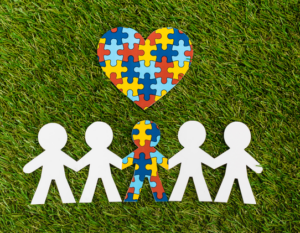
One of the most important things to understand about autism is that it exists on a spectrum and presents differently in every individual. For example, some people require significant support in their daily lives, while others need less support and live independently. Some autistic individuals communicate verbally, while others are nonverbal or use alternative forms of communication.
Although many people are diagnosed in childhood, others are diagnosed later in life—or not at all. A report from the CDC (March 24, 2023) found that more boys are diagnosed with autism than girls. However, this gap may reflect differences in how autism presents. Girls often exhibit subtler traits and may learn to “mask” their symptoms, making them harder to recognize. As a result, autism in girls is more likely to be overlooked or misdiagnosed.
Diagnosis in adulthood can also be more challenging, as individuals may have developed ways to hide or compensate for their symptoms over time. As autistic people move through different stages of life, their support needs may change; sometimes increasing and other times becoming less intensive. 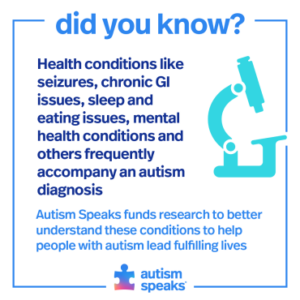
There are many people with autism that also experience other behavioral or mental health conditions that impact their quality of life. Most commonly, attention-deficit/hyperactivity disorder (ADHD), anxiety and depression, gastrointestinal (GI) disorders, seizures and sleep disorders frequently accompany an autism diagnosis.
Understanding Autism in Present Day
Research on autism continues to advance, and better understanding is ongoing. While some may argue that autism rates throughout the United States are increasing, experts agree this is primarily the result of improved research and diagnostic tools rather than an actual increase in autism rates.
An article from Johns Hopkins Bloomberg School of Public Health said, “There are two main reasons for the increase. The first is the broadened definition of Autism Spectrum Disorder, which means that more people are meeting this definition now than previously.
Second, there have been many widely successful public health programs that increased screening at wellness visits for children ages 18–24 months to look for signs of autism. Parents, caregivers, and community members are also more aware of the symptoms, and autism is being more accepted in the community. People are not as afraid to seek help and know where to go when they have concerns.”
Stigma, discrimination, and a lack of understanding continue to create barriers to diagnosis and access to treatment, therapy, and accommodations. This causes a significant impact to individuals with autism, their quality of life, their ability to succeed in society, and their families. Improving understanding and awareness of autism helps create a path for individuals on the spectrum to live meaningful lives as valued members of society.
Organizations Supporting Autism
Autsim Speaks is a charity started in February 2005 by Bob and Suzanne Wright, who have a grandchild with Autism. It is a major Autism advocacy organization that funds research and provides resources.
The American Autism Association started in 2010, is a non-profit organization dedicated to helping families and individuals find support, provide educational resources, and therapeutic athletic programs.
In 2007, the UN General Assembly designated April 2nd as World Autism Awareness Day (WAAD) “to highlight the need to help improve the quality of life of those with autism so they can lead full and meaningful lives as an integral part of society.”
“Like anyone else, autistic people should be able to shape their own lives — and help to shape our shared future.”
– António Guterres, former Prime Minister of Portugal and secretary-general of the United Nations
The Autistic Self Advocacy Network (ASAN) is an organization founded and run by autistic people. Since its grassroots beginning on October 27, 2006, ASAN has focused on policy and legal advocacy, developing educational resources, and providing leadership training for autistic self-advocates. Its slogan, “Nothing About Us, Without Us!,” underscores the importance of ensuring that autistic voices are heard and that autistic people are directly involved in the process of systemic change.
The main message from groups promoting autism awareness is that advocacy matters, research is essential, and acceptance is possible through understanding and compassion.
Autism and Social Security Benefits
Autism exists on a spectrum. While some autistic individuals can live independently, others have greater support needs and may be unable to financially support themselves.
There are state and federal assistance programs to help those with autism afford basic necessities.
Autism is listed as a qualifying condition to the Social Security Administration (SSA) under Mental Disorders Section 12.10 (adults) or 112.10 (children) in their Blue Book.
SSDI and Autism
To qualify for Social Security Disability Insurance (SSDI) benefits, applicants must provide documentation of a severe, ongoing impairment that significantly limits daily activities, social functioning, concentration, and the ability to engage in substantial gainful activity (SGA). SGA is a monthly earnings limit set each year by the SSA that determines the maximum amount an individual can earn and still qualify for benefits. In 2026, SGA for non-blind individuals is $1,690 for non-blind beneficiaries and $2,830 if they are blind.
Individuals must also have enough work credits, earned through the federal payroll tax FICA, to qualify.
SSI and Autism
Supplemental Security Income (SSI) is a federal income assistance program that provides monthly payments to people with limited income and resources who are 65 or older, or blind, or have a disability.
Unlike SSDI benefits, you do not have to have work credits to be eligible for benefits. However, there are strict limitations of asset amounts to qualify. You cannot have more than $2,000 in savings if you are an individual applying and no more than $3,000 if you are a couple applying.
Qualifying for Benefits with an Autism Diagnosis
As mentioned above, autism is a listed qualifying condition. However, because the support needs vary from person to person, a diagnosis alone does not guarantee eligibility for benefits. To qualify, there must be medical evidence—such as doctor’s notes, treatment plans, and medical records—documenting a “severe limitation” that prevents you from working for at least 12 months.
In some cases, an individual applying for benefits has multiple conditions that, combined, make them meet the SSA’s definition of disabled.
If you are applying for Social Security benefits, it is smart to consult with an attorney who specializes in disability law. They understand how the system works and can gather important information and documents needed for your application as well as apply or appeal the application on your behalf.
Fierce Advocacy
Our Firm is proud not only to be a leading disability law firm in the nation, but also to drive meaningful change beyond the courtroom.
We are committed to supporting our clients while advancing broader acceptance, inclusion, and equal access for the disability community.
We fight every day to ensure our clients receive the benefits they deserve, while recognizing that the pursuit of justice and equality for the disability community is ongoing. Nyman Turkish remains dedicated to advancing equity, access, and justice for all marginalized groups.
If you need assistance applying for benefits or appealing an SSA decision, visit our website or call 877-529-4773 for a FREE case review.
